
A Fuel Smell You Shouldn't Ignore You get into your vehicle, start driving, and a few minutes later, you notice something that doesn't belong: the smell of gasoline. Maybe it's faint. Maybe it comes and goes. Either way, it's worth taking seriously. A fuel smell can have several causes, and the source isn't always obvious. That's why finding the actual leak matters before recommending a repair. We recently had a Hyundai SUV come into SSC Auto Repair at Highland in Chandler with just this concern. The Smell Started After About Ten Minutes The driver reported a fuel smell that appeared after about ten minutes. That detail was helpful. Knowing when a problem shows up gives our technicians a better starting point for the inspection. In this case, our technician found a leak at the top of the fuel pump assembly. The leak was at an area sometimes called the fuel pump hat , near the top of the assembly. Now there was a specific finding to explain the odor and support the repair recommendation. What the Inspection Revealed Once the leak was located, the next step was addressing the problem. The completed repair included replacing the fuel pump and tank seal. It's important to understand what that finding means. This wasn't a case where the fuel pump had stopped delivering fuel to the engine. The documented problem was a fuel leak at the top of the assembly . Those are different concerns, and they deserve different explanations. For this Hyundai, the inspection established three things: The concern: A gasoline smell appeared after about ten minutes. The finding: A leak at the top of the fuel pump assembly. The repair: Replacement of the fuel pump and tank seal. That's the kind of information a driver should have before approving work. What Should You Do if Your Car Smells Like Gas? A gasoline odor isn't something to investigate by taking another drive around the block. If you suspect a fuel leak, stop using the vehicle and arrange professional assistance. Avoid smoking, flames, or anything else that could ignite fuel vapors. If the odor is strong or you see fuel leaking, move away from the vehicle and arrange for a tow rather than driving it to the shop. When you contact your repair shop, a few details can help: When did you first notice the smell? Does it happen right after refueling or after the vehicle has been running? Is the smell stronger inside or outside the vehicle? Have you noticed any visible leakage? You don't need to figure out which part has failed. That's what a professional vehicle diagnostic inspection is for. A Fuel Smell Deserves a Clear Answer For this Hyundai SUV, the fuel smell led our technician to a leak at the top of the fuel pump assembly. That finding supported the repair, which included replacing the pump and tank seal. Another vehicle with the same smell might have a completely different problem. That's why checking the actual vehicle matters. At SSC Auto Repair at Highland in Chandler, the goal is to explain what was found, why the repair is recommended, and what work needs to be done. Whether you need Hyundai repair or drive another make, getting a clear diagnosis is what matters. And when gasoline is involved, getting that answer safely matters even more.
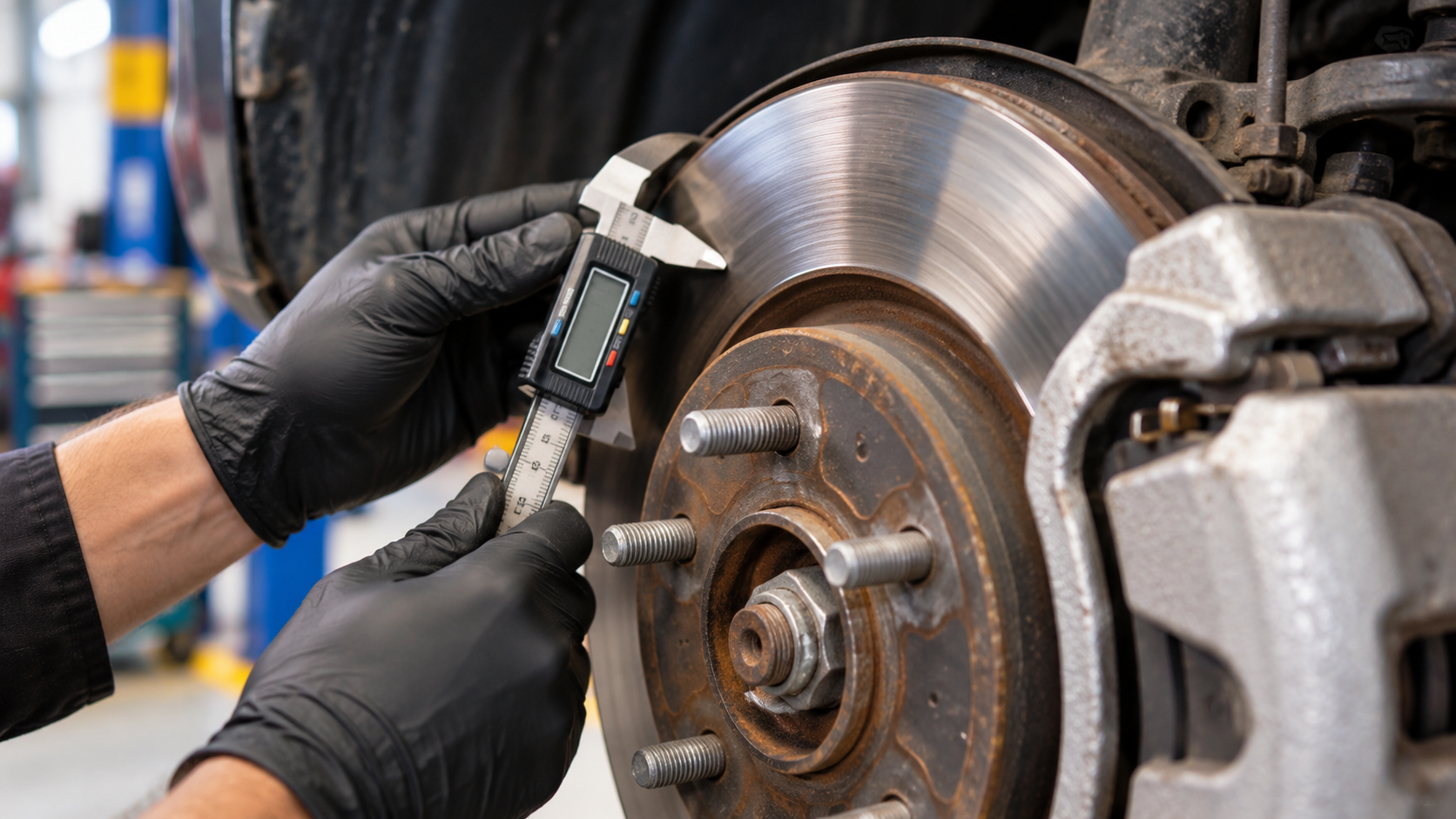
You press the brake pedal and notice a slight pulsation. Maybe there's a little noise, too. Your first thought might be that your brake pads are worn out. But what happens when the pads are actually in great shape? That's what we found when a Toyota Camry came into SSC Auto Repair at Highland in Chandler with a concern about brake pulsation and noise. The pads were in excellent condition. The problem was elsewhere. Good Brake Pads, but Something Wasn't Right When our technician inspected the Toyota's brakes, the brake pads looked good. That was welcome news for the customer. But it didn't explain the pulsation. The inspection revealed concerns with the brake rotors. The technician described them as warped, which helped explain what the driver was experiencing. Brake pads and rotors work together to slow your vehicle. Even when the pads have plenty of life left, problems with the rotors can affect how the brakes feel. That's why we inspect the braking system before recommending repairs. Our brake service includes checking the condition of the pads, rotors, and other braking components. What Did the Toyota Actually Need? Based on the inspection, our technician recommended resurfacing the front and rear brake rotors. Here's what the visit involved: The concern: Slight brake pulsation and noise. What we found: Rotor concerns, with brake pads in excellent condition. The repair: Front and rear rotor resurfacing. Additional attention: Pad lubrication was noted to help address the noise. The important detail is that the brake pads didn't need to be treated as worn out simply because the driver noticed a braking problem. Each part of the recommendation had a reason. Can Brake Rotors Always Be Resurfaced? No. And that's an important distinction. Resurfacing removes a small amount of material from the rotor to restore a suitable braking surface. But every rotor has service limits. If a rotor is too thin, damaged, or otherwise outside the manufacturer's specifications, resurfacing may not be appropriate. That's why the condition of the actual parts matters. We want to recommend the work that makes sense for your vehicle. What Should You Do if Your Brake Pedal Pulsates? If your brakes feel different, it's worth having them inspected promptly. Pay attention to a few details: Does the pulsation happen every time you brake or only at certain speeds? Do you feel it in the brake pedal, steering wheel, or throughout the vehicle? Is there any squeaking, grinding, or other unusual noise? You don't need to diagnose the problem yourself. Those details simply help us understand what you're experiencing. And don't assume that good brake pads mean everything else is fine. A Clear Answer Makes a Difference For this Toyota Camry, the inspection revealed rotor concerns even though the brake pads were in excellent condition. That distinction mattered. It allowed us to explain the recommended work and why each part was being addressed. When you bring your vehicle to SSC Auto Repair at Highland, that's what we want you to have: a clear understanding of what's happening with your vehicle and confidence in the repair recommendation. Whether you need Toyota repair or drive another make, SSC Auto Repair can help you understand what's happening with your brakes. If your brake pedal is pulsating or your brakes are making noise in Chandler, we're here to help you find out why. Because good brake pads deserve some credit. They just can't take responsibility for the entire braking system.
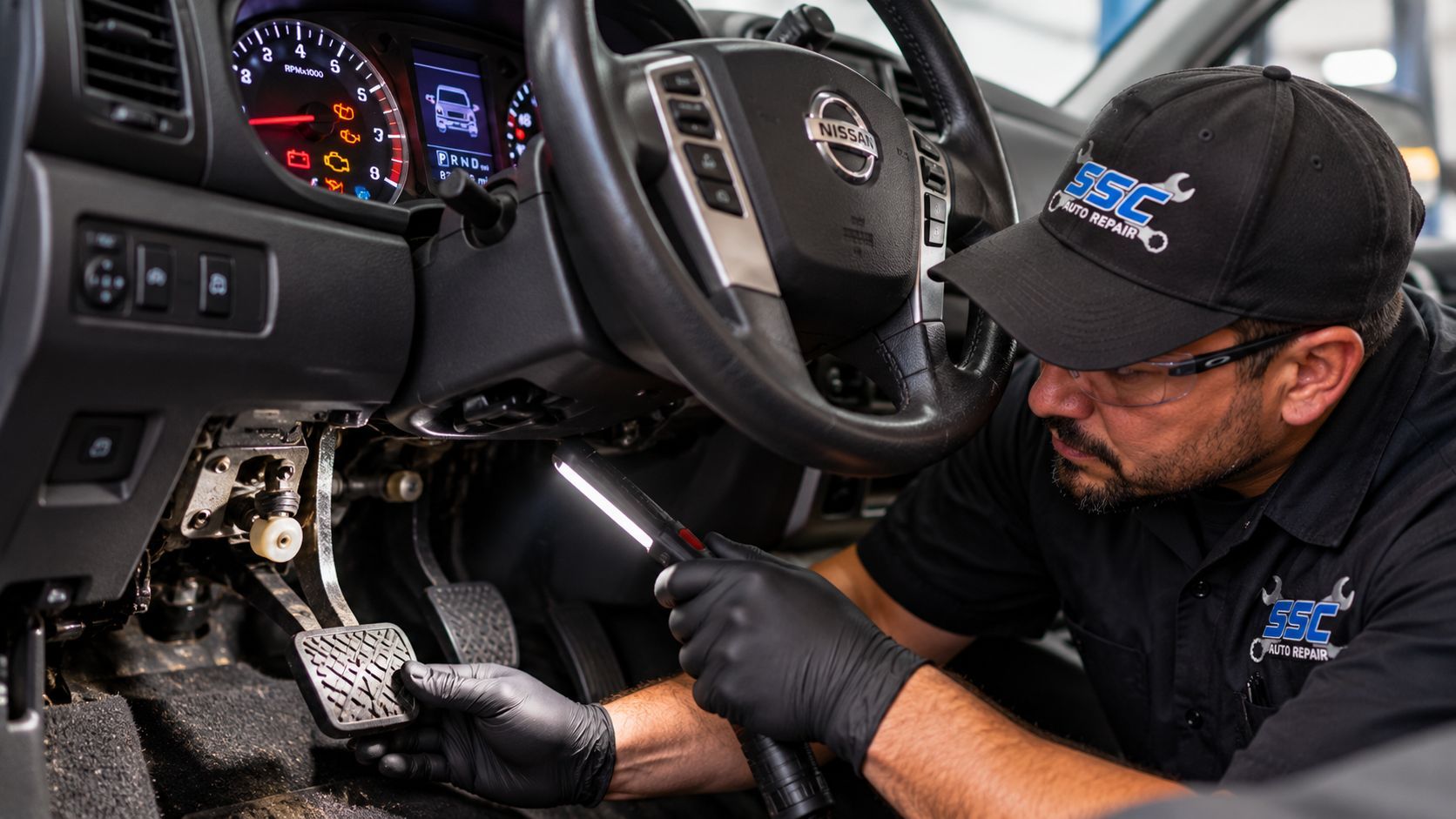
You turn the key. The dashboard lights come on, but the engine won't start. Maybe you just replaced the battery. Now you're wondering if the starter is bad. It's frustrating, especially when you've already spent money trying to solve the problem. And it's easy to assume the starter must be next. But there are several reasons a vehicle might not crank, even when the lights work. We recently had a Nissan pickup come into SSC Auto Repair at Highland in Chandler with this exact concern. What we found was a good reminder of why a proper diagnosis matters. A New Battery, Working Lights, and No Crank The Nissan had a new battery. The dashboard lights worked. But when the driver tried to start it, the engine wouldn't crank. The starter was an understandable suspect. Rather than assume it needed replacement, our technician inspected the vehicle to find out what was preventing the engine from cranking. The answer was a deteriorated clutch pedal stopper that had come apart. It's a small component, but on this Nissan, it played an important role in the starting process. What Was Actually Wrong? On a manual-transmission vehicle, the starting system includes a safety control associated with the clutch pedal. It's designed to prevent the engine from starting unless the clutch is depressed. In this case, the damaged pedal stopper prevented the starting system from operating properly. Here's what the repair involved: The problem: The engine wouldn't crank. What we found: A deteriorated clutch pedal stopper. What we did: Replaced the damaged stopper. The result: The Nissan operated as designed. No starter replacement was needed. Why We Diagnose Before Recommending Repairs When your vehicle won't start, you want answers. You also want to know that the money you're spending will actually solve the problem. That's why we pay attention to the symptoms and inspect the vehicle before recommending a repair. Our vehicle diagnostics service is built around finding the cause and explaining what we discover. A new battery and working dashboard lights provide useful information. But they don't tell the whole story. In this case, the problem was a small part at the clutch pedal. Replacing the starter wouldn't have addressed the actual cause. Finding the right problem helped us recommend the right repair. A Few Details That Can Help Us Help You If your vehicle won't start, you don't need to figure out what's wrong before bringing it in. That's our job. But it helps to tell us exactly what happens when you try to start it. Does the engine click? Turn slowly? Stay completely silent? Does it turn over but never start? If you drive a manual-transmission vehicle, let us know if pressing or moving the clutch pedal makes any difference. And if you've recently replaced the battery or had other work done, mention that too. Those little details can help us understand what you're experiencing and where to begin. Sometimes the Smallest Part Makes the Biggest Difference The Nissan's starting problem turned out to be a deteriorated clutch pedal stopper. Once we replaced it, the vehicle operated as designed. For the customer, that meant having an answer and a vehicle that would start again. That's what we want for every customer who comes through our doors: a clear explanation of what's wrong, a recommendation that makes sense, and confidence in the work being done. Whether you need Nissan repair or help with another make, SSC Auto Repair can help you find out why your car won't start. After all, the starter should get a fair trial before it gets replaced.
How to decide what needs attention now, what can wait, and what could cost more later. When an inspection turns up several repairs, the goal is to understand what needs attention now, what can wait, and what could get worse if you put it off. At SSC Auto Repair, we break repairs down by priority so you can make a wise decision without pressure. What Auto Repairs Should Be Done First? Safety comes first. If a problem affects your ability to stop, steer, control the vehicle, or safely drive around other people, that is the number one priority. After that, we look at problems that could damage the vehicle or become more expensive if they are ignored. A practical repair priority list looks like this: Safety repairs: Brakes, tires, steering, suspension, or anything affecting vehicle control Repairs that prevent bigger damage: Problems that can lead to more expensive failures Maintenance and future repairs: Items that matter but can reasonably be scheduled later Not everything on an inspection report is equally urgent. A good shop should tell you the difference. Can You Wait on a Car Repair? Sometimes, yes. The important question is what happens if you wait. Brakes are a good example. If the pads are worn but still have material left, repairing them now may allow the rotors to be resurfaced. Keep driving until the pads go metal to metal and you may need rotors too. A coolant leak can work the same way. It may be small today, but if it lets go, the engine can overheat rapidly. A manageable cooling system repair can become major engine damage. We do not need to make every repair sound urgent. We do need to explain the potential outcome of waiting. Your Inspection Should Give You a Plan A digital vehicle inspection is useful because it shows what we found. But a long report without an explanation can create more stress than clarity. If we find ten items, we will help you understand which ones matter most. Some may need attention now. Others may simply be showing wear that should be watched or planned for later. That is where trust matters. You should not have to guess which repairs are important or wonder whether everything on the list has to happen today. What If the Most Important Repairs Are Too Expensive? Sometimes the repairs that make sense are more than someone can comfortably handle in one visit. SSC Auto Repair has multiple financing options when that helps, but financing is not the point of the conversation. The point is giving you clear information. You should know what protects your safety, what protects the vehicle, what can wait, and what waiting could mean. You may not be able to fix everything today. That is okay. Start with what matters most.

The Tires Still Had Tread. We Said No to the Rotation Anyway. A customer recently brought us a vehicle for a tire rotation. We said no. The tires were not bald. In fact, they still had a decent amount of tread left. The problem was the rubber. Arizona heat had baked the tires until cracks began forming across the tread and around the sidewalls. Rotating them would not make them safer or extend their useful life. It would only move the problem to a different corner of the car. So instead of charging for a service that would not help, we recommended replacing the tires. The tread was still there. The rubber wasn’t. Most people judge a tire by its tread. That makes sense. Tread is easy to see, and everyone knows a bald tire is a bad tire. But tread depth is only part of the story. Tires are made from rubber compounds that change as they age. Heat, sunlight, oxygen and time can cause the rubber to harden and crack. You may hear this called weather cracking or dry rot. That means a tire can still look usable at first glance while the rubber itself is already breaking down. Arizona is brutal on tires Low mileage does not always mean a tire is in good condition, especially here. A vehicle may only be driven a few thousand miles each year, leaving plenty of tread behind. But those tires are still spending year after year sitting in Arizona heat and sunlight. We regularly see this on vehicles that are not driven much. The tread looks almost new, but the rubber has become dry, hardened or cracked. The odometer does not tell the whole story either. Does every small crack mean you need tires? No. The location, depth and severity of the cracking matter. A few minor surface marks are not the same as deep cracking between the tread blocks or along the sidewall. That is why tires should be inspected instead of diagnosed from one quick glance. As the rubber continues to age, it loses flexibility and becomes more vulnerable to damage and failure. The National Highway Traffic Safety Administration warns that tires become more prone to failure as they age, even when they still have tread remaining. Tread depth matters. So do age, condition and what the rubber is telling us. Why didn’t we just rotate them? A tire rotation is meant to even out normal wear and help a healthy set of tires last longer. It cannot reverse aging rubber. It cannot remove cracks. It cannot make a weakened tire safer. Once the condition of the rubber becomes the real problem, a rotation no longer accomplishes what the customer is paying for. Performing it would have been easy. It just would not have been useful. How old are your tires? You can find the manufacturing date at the end of the DOT code on the tire’s sidewall. The final four numbers identify the week and year the tire was made. For example, 1821 means the tire was manufactured during the eighteenth week of 2021. There is no single age that automatically condemns every tire. Different manufacturers have their own guidelines, and how a tire is driven, maintained and stored all matter. Visible cracking may justify replacement before an age guideline does. That is why we inspect the entire tire instead of making a recommendation from one number alone. Sometimes the right service is the one we do not perform Your car will always need maintenance. We do not need to turn every visit into that day. Our job is to inspect what is actually in front of us, show you what we find and recommend what makes sense. Sometimes that means performing the service you requested. Sometimes it means telling you it can wait. And sometimes it means saying no because the service will not solve the real problem. We would rather earn your trust than charge you for something that will not help.
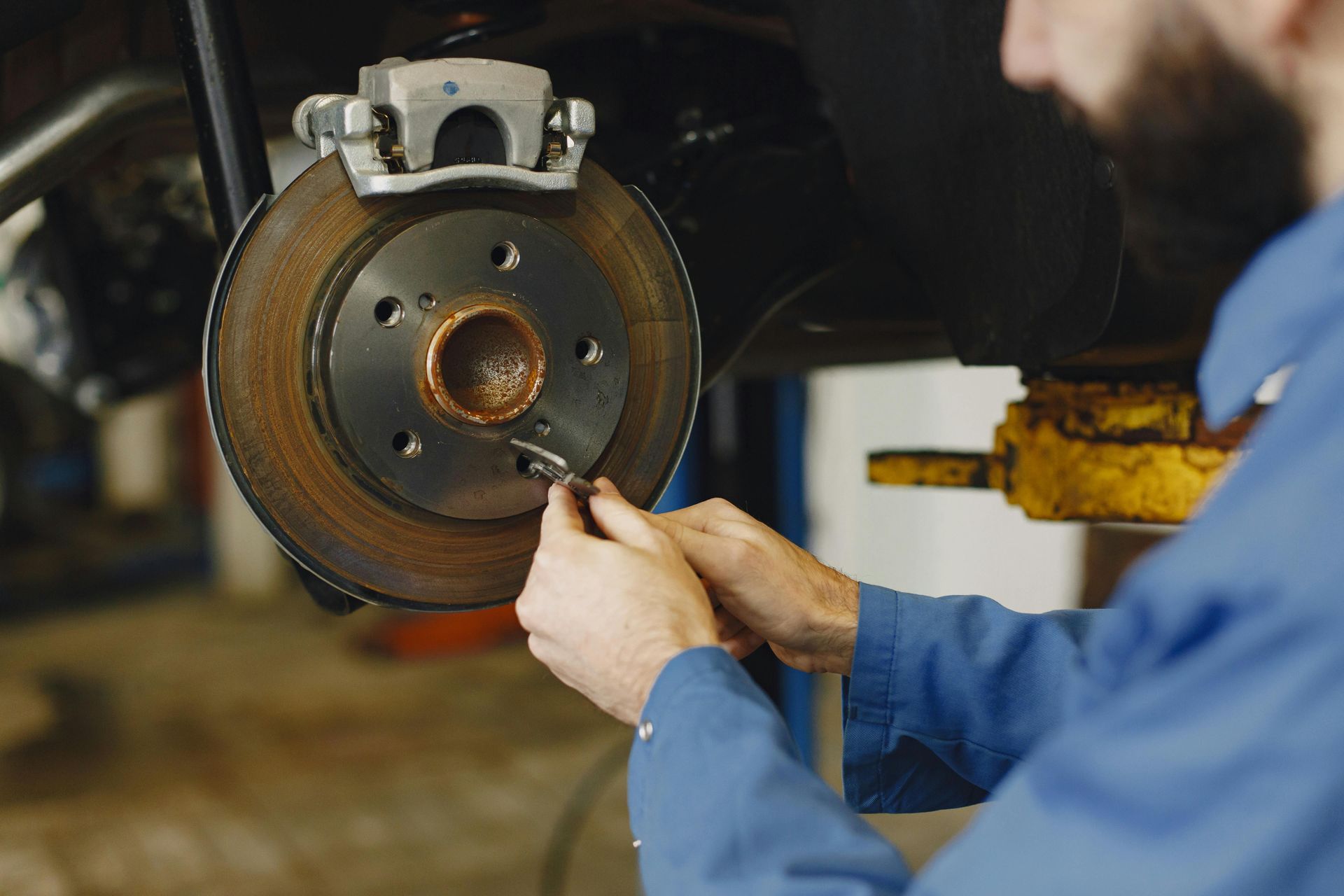
What Causes Brake Vibrations and Why They Often Get Worse Over Time
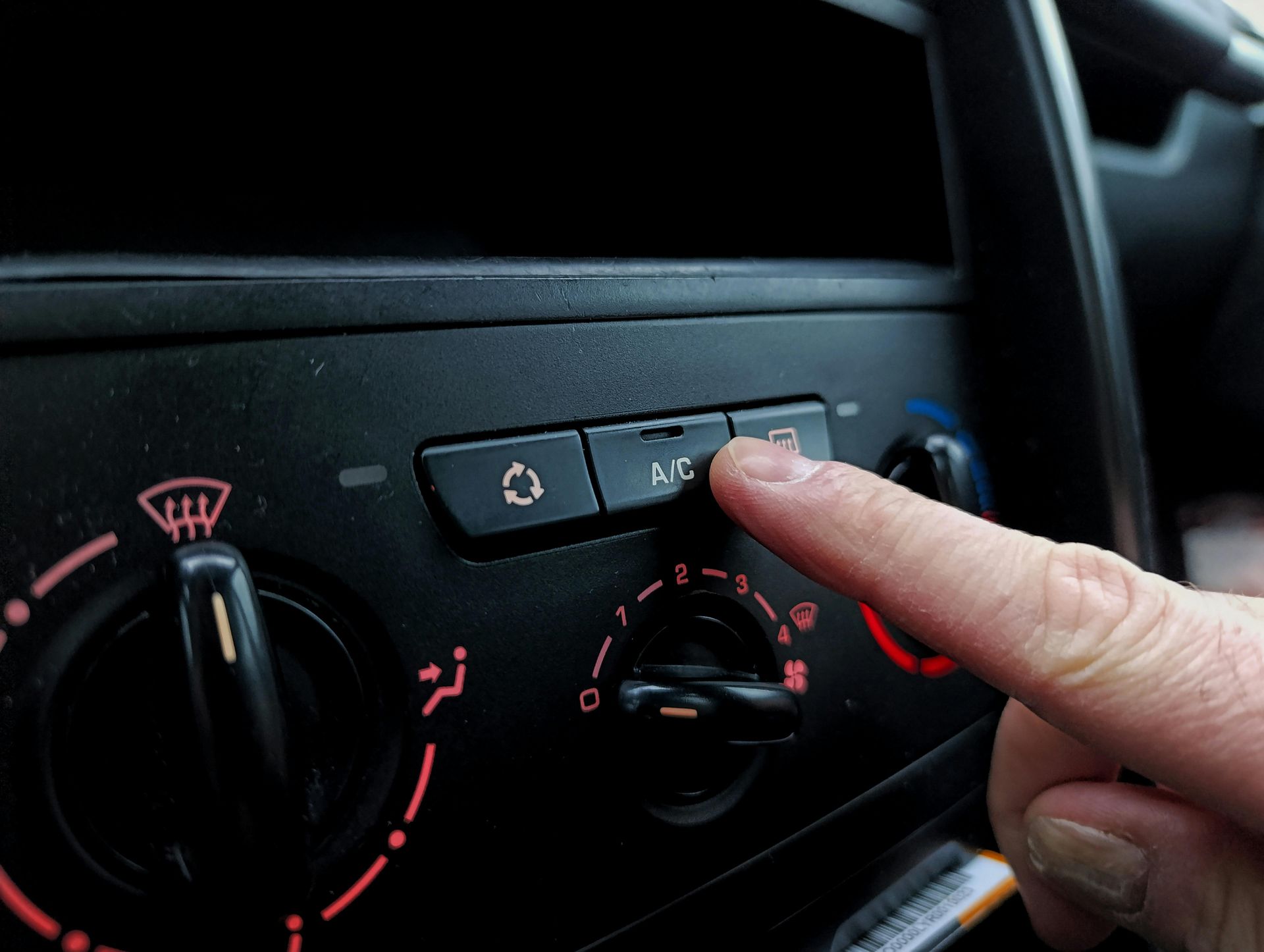
Common Causes of AC Problems That Become Noticeable at Stoplights and in Arizona Traffic

Arizona Heat Pushes AC Systems Hard You usually notice it sitting at a stoplight. The AC that felt fine a few weeks ago suddenly can’t keep up. The air gets warmer, the cabin heats up fast, and the drive becomes miserable. Sometimes the AC is cold while driving but warm at idle. Sometimes it takes forever to cool down. Other times it simply stops blowing cold air altogether. A lot of drivers assume they just need an AC recharge. Sometimes that’s true. But during Arizona summers, weak AC systems tend to show bigger underlying problems once temperatures really climb. Low Refrigerant Is Only Part of the Story Low refrigerant is one of the most common reasons AC systems stop cooling properly. When refrigerant levels drop, the system loses efficiency and struggles to keep vent temperatures cold during extreme heat. Arizona summers make even small AC problems feel much worse. But low refrigerant usually raises another question: where did it go? Small leaks can develop in hoses, seals, condensers, or other AC components over time. Some are obvious. Others are extremely slow and difficult to detect without proper inspection. Common signs of AC problems include: AC cold while driving but warm at stoplights Weak airflow from vents AC taking longer to cool down Air that feels cool but not truly cold Cooling that gets worse during the hottest part of the day In many cases, simply adding refrigerant may only improve performance temporarily if another issue exists underneath. Airflow and Compressor Problems Are Also Common Not every AC problem is caused by low refrigerant. Cooling fans, airflow restrictions, electrical problems, and failing compressors can all affect how well your AC performs — especially during long Arizona summers. One of the most common complaints we hear is: “My AC works better while driving than when I’m sitting still.” That often points toward airflow or cooling fan issues. We also regularly see compressors begin struggling once systems are placed under heavier heat load during summer. The earlier these issues are identified, the better chance there is of avoiding larger repairs later. Why Proper AC Inspection Matters At SSC Auto Repair, we do more than simply add refrigerant and send vehicles back out the door. We inspect how the entire AC system is performing so we can help determine whether the issue involves refrigerant levels, leaks, airflow problems, compressor concerns, or something else affecting performance. Arizona summers are hard enough without driving a vehicle that can’t stay cool. If your car’s AC is already struggling now, there’s a good chance the problem will become much more noticeable once temperatures peak.
If you’ve ever second-guessed a repair, you already know why this matters.
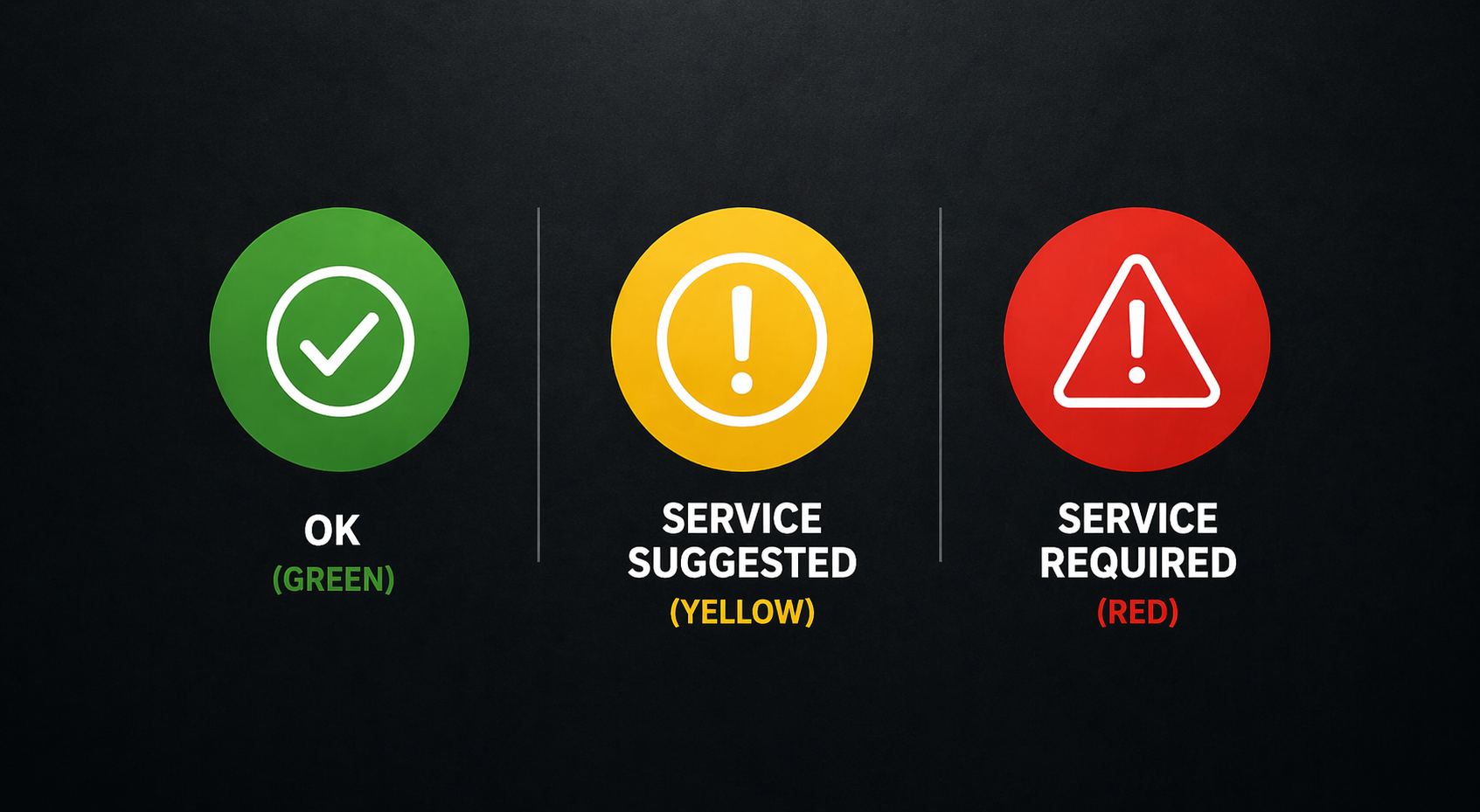
A clear, simple way to understand what needs attention now, what can wait, and how to avoid unnecessary repairs